Overtime is not taxed more than your normal pay. The tax rate on an overtime hour is the same as the rate on a normal hour.
What you are seeing on your payslip is withholding, not tax. When you earn more in one pay period, your employer holds back more tax for that period. It can look like you paid a higher rate. You did not. When you file your tax return, the extra comes back.
There is also something new. For 2025 through 2028, part of your overtime can be taken off your taxable income. Most people have not heard about that yet, so I have put the details further down.
Is overtime taxed more than regular pay?
No. There is no separate tax rate for overtime. The tax system does not care whether a dollar came from your 39th hour or your 45th. It only looks at your total for the year.
Income tax works in bands. The first slice of your income is taxed at a low rate. The next slice is taxed at a higher one. Only the money inside each band is taxed at that band's rate.
So a heavy overtime year can push some of your income into a higher band. That part is real. But it only touches the dollars above the line, not everything you earned. Extra hours never leave you with less pay because of a tax band.
Why your overtime check looks smaller than you expected
Your employer does not know what you will earn this year. So the tax tables work from the one pay period in front of them.
The method treats the current check as if every check will be that size. A big check looks like a big year, so more tax comes out of it. Your next normal check goes back to normal.
That is why a heavy overtime week feels punished. Nothing was taxed at a special rate. Money was just taken early. If too much came out across the year, you get it back when you file.
The new overtime deduction for 2025 to 2028
This is the part that actually changed.
For tax years 2025 through 2028, you can deduct some of your overtime pay on your federal return. The cap is $12,500, or $25,000 if you are married and file jointly. You do not have to itemize to get it.
Only the extra half counts
This is where people get it wrong. You cannot deduct all of your overtime pay. Only the premium counts, which is the extra amount above your normal rate.
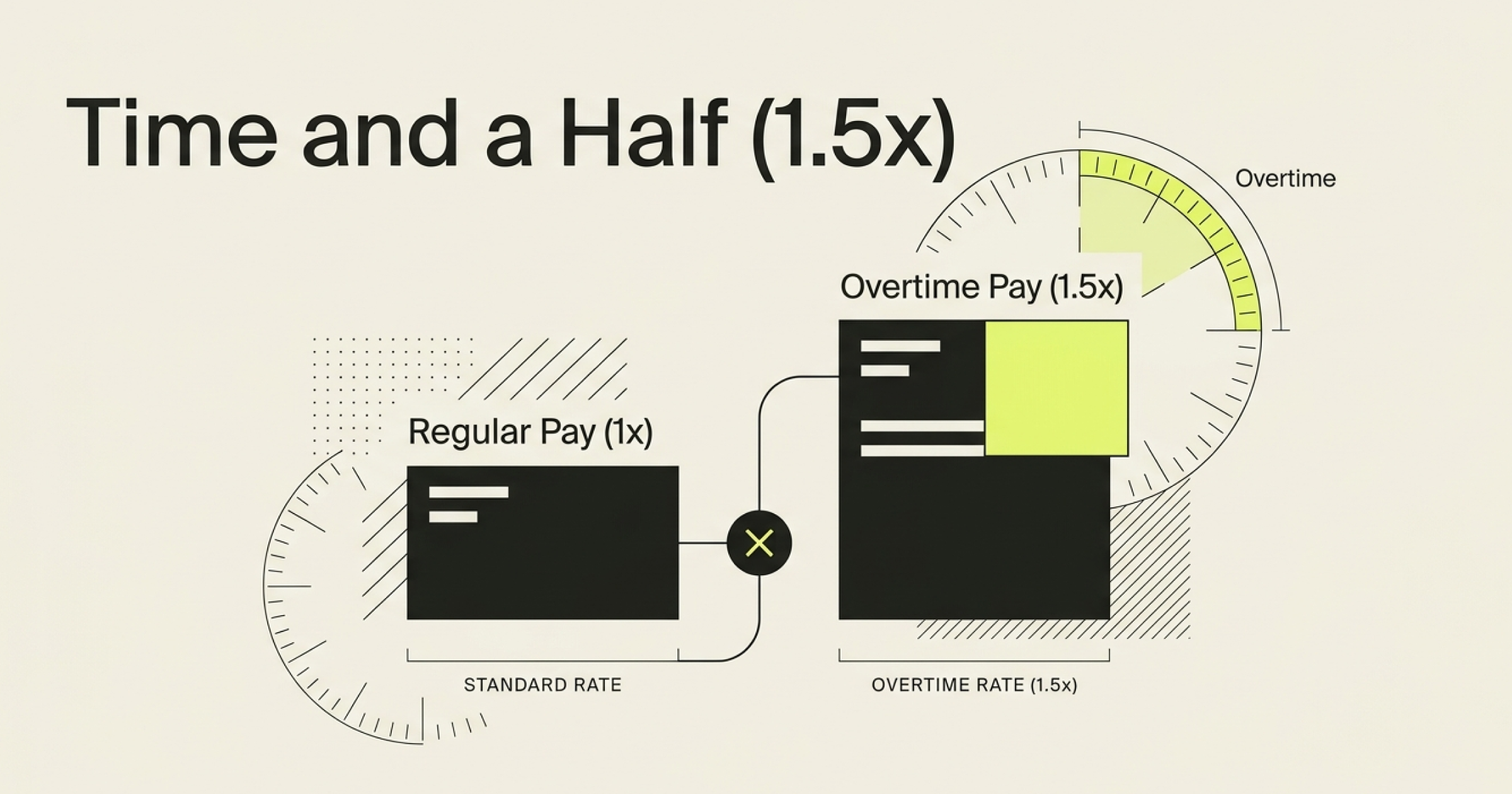
Say your normal rate is $20 an hour. Overtime pays time and a half, so $30 an hour. You work 10 overtime hours.
- Those 10 hours pay $300.
- At your normal rate they would have paid $200.
- The premium is $100, and that is the deductible part.
Work 10 overtime hours a week for 45 weeks and the premium comes to $4,500 for the year. That sits under the cap, so all of it counts.
Who does not get it
The deduction shrinks as income rises. It drops by $100 for every $1,000 of income above $150,000, or above $300,000 on a joint return. Follow that through and a single filer has nothing left at $275,000. On a joint return it runs out at $550,000.
Two other rules catch people out:
- You need a Social Security number valid for work, and it has to be on the return.
- If you are married, you have to file jointly. Filing separately means no deduction.
It also only covers overtime that the Fair Labor Standards Act requires, which is the time and a half for hours past 40 in a week. Extra pay your employer hands out by choice does not count. Neither does overtime that only your state requires, such as a daily overtime rule.
Social Security and Medicare still come out
The deduction is for income tax only. Social Security and Medicare are still taken from your overtime, at 6.2% and 1.45%. The phrase "no tax on overtime" is not accurate. Some tax still comes out.
You do not have to wait for the refund
If you expect a decent overtime deduction, you can give your employer a new Form W-4. That form tells them how much income tax to hold back, and it can account for a deduction you know is coming.
The result is more money in each paycheck instead of a larger refund in April. I would rather have it that way. A refund is money you lent the government for a year at no interest.
Do not push it too far, though. If too little comes out during the year, you will owe when you file.
Get the overtime number right first
None of this matters until the overtime figure itself is correct. The Overtime Pay Calculator works out time and a half for a pay period. If you are starting from a timesheet, add the week up with the Time Card Calculator first, then read How to Calculate Overtime Pay for the rules behind the number.
One thing I cannot tell you is whether you qualify for overtime at all, or how your state changes the number. That depends on your job and where you work. Your payroll team or a tax professional can settle it.
Frequently asked questions
Is overtime taxed at 40%?
No. There is no 40% overtime rate. What you saw was a large amount held back from one big check, because the tax tables treat that check as if every check were that size. It evens out when you file.
Do I get overtime tax back?
If more was held back over the year than you actually owed, yes, it comes back as a refund. A refund is not a bonus. It is your own money being returned.
Does the new deduction mean I pay no tax on overtime?
No. It only covers the premium half of your overtime, it is capped at $12,500, and Social Security and Medicare still apply. It lowers the tax on overtime rather than removing it.
Does the overtime deduction apply to my state taxes?
This is a federal deduction. States write their own tax rules and not all of them match the federal one. Check with your state tax agency.
Sources
- 26 U.S. Code 225, Qualified overtime compensation, Cornell Law School, Legal Information Institute. Checked .
- Questions and answers about the new deduction for qualified overtime compensation, Internal Revenue Service. Checked .
- Publication 15 (2026), Employer's Tax Guide, Internal Revenue Service. Checked .
- 29 U.S. Code 207, Maximum hours, Cornell Law School, Legal Information Institute. Checked .