Pay converter
Adjust working hours and weeks for a more useful estimate.
Annual
$85,280.00
Hourly
$41.00
Weekly
$1,640.00
Monthly average
$7,106.67
$41 an hour, broken down
At 40 hours a week for 52 paid weeks, before tax.
- Yearly
- $85,280
- Monthly
- $7,106.67
- Biweekly
- $3,280
- Weekly
- $1,640
- Daily (8h)
- $328
What $41 an hour pays at your hours
Part time changes the answer more than anything else, so find your own week here.
| Hours per week | Weekly | Yearly (52 weeks) |
|---|---|---|
| 10 | $410 | $21,320 |
| 15 | $615 | $31,980 |
| 20 | $820 | $42,640 |
| 25 | $1,025 | $53,300 |
| 30 | $1,230 | $63,960 |
| 35 | $1,435 | $74,620 |
| 40 | $1,640 | $85,280 |
| 45 | $1,845 | $95,940 |
Overtime at $41 an hour
Time and a half on $41 is $61.50 an hour. Five overtime hours a week adds $307.50 to that paycheck, and $15,990 across a year of it. The Overtime Pay Calculator splits a full pay period. If a bigger check looked over taxed, that usually reflects how withholding applies to the whole paycheck, not a separate overtime tax rate.
Common questions
How much is $41 an hour biweekly?
$3,280 every two weeks at 40 hours a week, because each biweekly paycheck covers 80 hours. That is the gross figure, before tax and deductions come out.
How much is $41 an hour part time?
At 20 hours a week, $41 an hour is $42,640 a year. At 25 hours it is $53,300. Multiply the rate by your weekly hours, then by 52.
What is time and a half at $41 an hour?
$61.50 an hour. Overtime law uses your regular rate, which can be higher than your base wage in weeks where you earn a bonus or shift differential.
Is $85,280 before or after taxes?
Before. $85,280 is gross pay. Tax, insurance, and retirement contributions come out of it, so the amount reaching your account will be lower.
Other wages
Runs in your browser. Your entries are calculated on this device. Ziannah does not store the values you enter here.
Related tools
Explore all toolsOvertime Pay Calculator Estimate regular pay, overtime pay, total hours, and gross earnings for a pay period.
Time Card Calculator Add a weekly time card with breaks, regular hours, overtime, and estimated gross pay.
Work Hours Calculator Find the length of a shift after subtracting lunch or other unpaid breaks.
How it works
The math behind $85,280
Annual pay is the hourly rate multiplied by hours per week, then by paid weeks per year. Here that is $41 x 40 x 52 = $85,280. Change either number and the result moves with it.
Monthly is an average
$85,280 divided by 12 is $7,106.67 a month. No paycheck actually arrives in that amount on most schedules. Biweekly pay lands 26 times a year, which is why two months a year contain three paydays.
Gross is not take home
Every figure on this page is before federal and state tax, Social Security, Medicare, insurance, and retirement contributions. Take home pay depends on where you live and what you have withheld, so no honest page can give you one number for it.
Paid weeks matter more than people think
The 52 week figure assumes every week is paid. If two weeks are unpaid, use 50: $41 x 40 x 50 = $82,000. Seasonal and term time work can be far fewer, and the shortcut overstates those schedules badly.
Related reading
Read the blog
Article
Is overtime taxed more? No, and here is the real reason
Overtime is taxed at the same rate as your normal pay. Here is why your payslip looks wrong, and the new deduction that cuts what you owe from 2025 to 2028.
Article
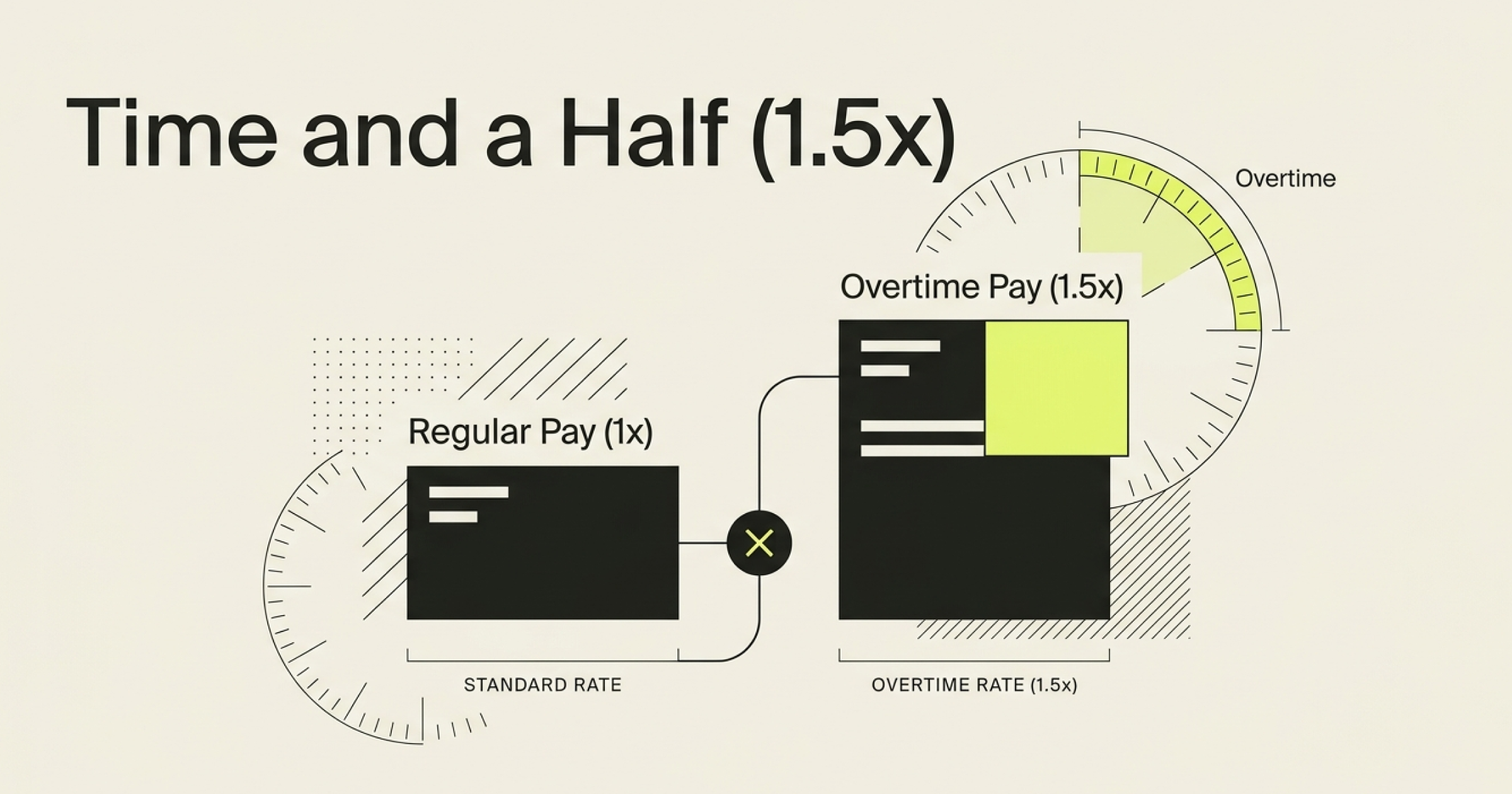
How to Calculate Overtime Pay (Time and a Half)
Multiply your regular rate by 1.5 and then by your overtime hours. The hard part is knowing which rate to use, because it is often higher than your wage.

Article
Minutes to Decimal Hours: Payroll Conversion Chart
Divide minutes by 60. Here is the chart, the four values worth memorizing, and the rounding habit that quietly costs you minutes every week.