Calculator
Enter your values and read the result.
30
15% of 200 is 30
Other calculations
The formula
Answer = percentage ÷ 100 × the number
How to find a percentage of a number
- 1.Divide the percentage by 100 to turn it into a decimal. 15% becomes 0.15.
- 2.Multiply that decimal by the number.
Worked example
What is 15% of 200?
- 15 ÷ 100 = 0.15
- 0.15 × 200 = 30
15% of 200 is 30.
A shortcut worth knowing
Ten percent of anything is the number with the decimal point moved one place left, so 10% of 240 is 24. Five percent is half of that, and 20% is double. Most everyday percentages can be built from those without a calculator.
Common questions
How do you find a percentage of a number?
Divide the percentage by 100, then multiply by the number. 15% of 200 is 0.15 × 200, which is 30.
How do I work out a tip or a discount?
Both are a percent of a number. A 20% tip on $45 is 0.20 × 45, which is $9. A 30% discount on $80 takes off 0.30 × 80, which is $24, leaving $56.
Can the percentage be more than 100?
Yes. 150% of 80 is 1.5 × 80, which is 120. Anything over 100% gives an answer larger than the number.
Other percentage calculations
Runs in your browser. Your entries are calculated on this device. Ziannah does not store the values you enter here.
Related tools
Explore all toolsHow it works
The formula
Answer = percentage ÷ 100 × the number
How to find a percentage of a number
Divide the percentage by 100 to turn it into a decimal. 15% becomes 0.15. Multiply that decimal by the number.
A shortcut worth knowing
Ten percent of anything is the number with the decimal point moved one place left, so 10% of 240 is 24. Five percent is half of that, and 20% is double. Most everyday percentages can be built from those without a calculator.
Related reading
Read the blog
Article
Is overtime taxed more? No, and here is the real reason
Overtime is taxed at the same rate as your normal pay. Here is why your payslip looks wrong, and the new deduction that cuts what you owe from 2025 to 2028.
Article
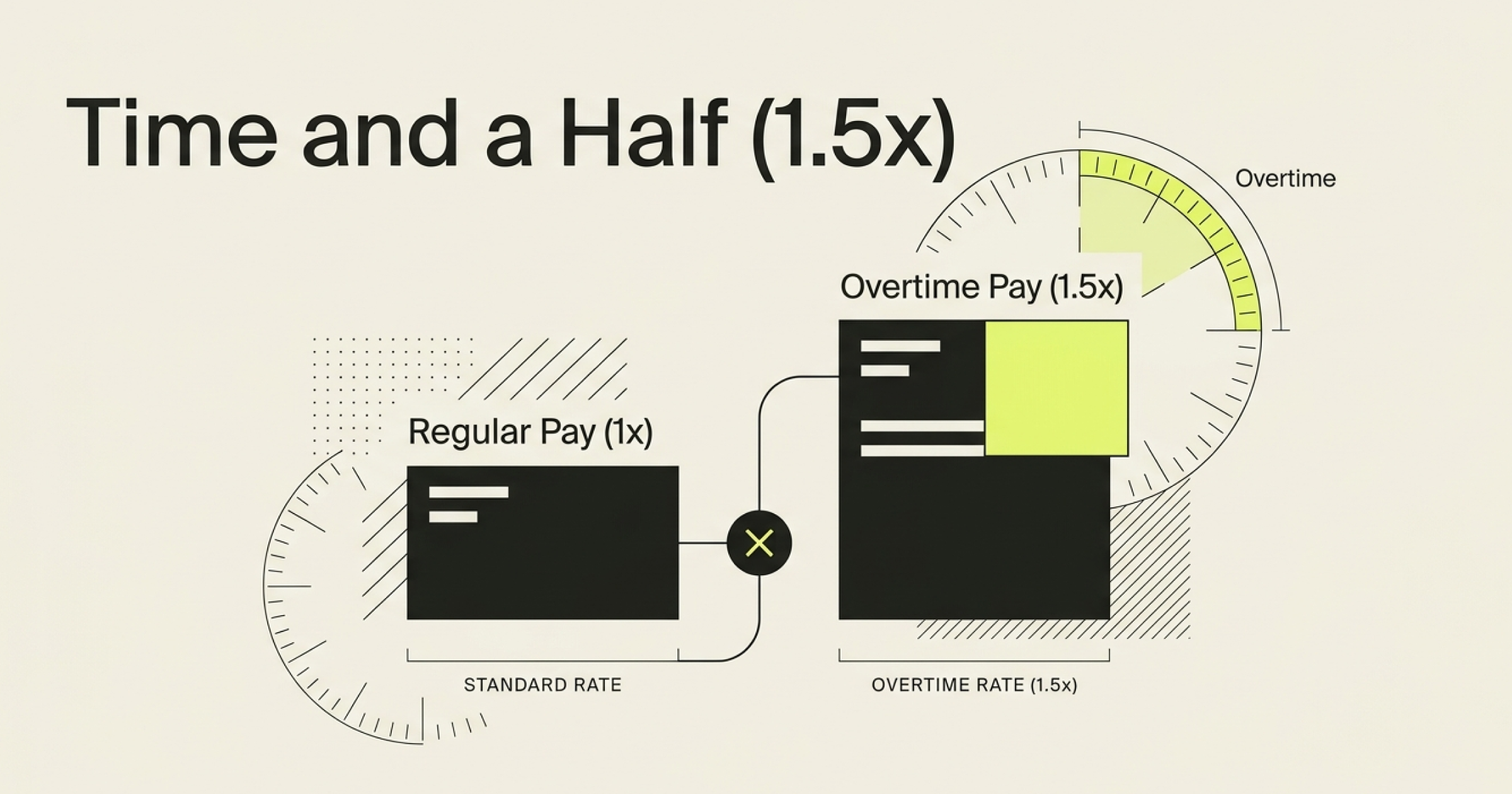
How to Calculate Overtime Pay (Time and a Half)
Multiply your regular rate by 1.5 and then by your overtime hours. The hard part is knowing which rate to use, because it is often higher than your wage.

Article
Minutes to Decimal Hours: Payroll Conversion Chart
Divide minutes by 60. Here is the chart, the four values worth memorizing, and the rounding habit that quietly costs you minutes every week.