Calculator
Enter your values and read the result.
15%
46,000 is a 15% increase from 40,000
Other calculations
The percentage increase formula
Percentage increase = (new value − original value) ÷ original value × 100
How to calculate percentage increase
- 1.Subtract the original value from the new value. That gives you the size of the rise.
- 2.Divide that rise by the original value, not by the new one. This is the step people get wrong.
- 3.Multiply by 100 to turn it into a percentage.
Worked example
Your pay went from $40,000 to $46,000. What is the percentage increase?
- The rise is 46,000 − 40,000 = 6,000
- 6,000 ÷ 40,000 = 0.15
- 0.15 × 100 = 15%
That is a 15% increase.
Increase, decrease, growth, and change are one calculation
Percentage increase, percentage decrease, percent change, growth rate, and percentage rise all use the same sum. Only the direction differs: a positive answer is an increase, a negative one is a decrease. A jacket falling from $80 to $60 is (60 − 80) ÷ 80 × 100, a 25% decrease. Always divide by the value you started from. Worth knowing: a 20% fall followed by a 20% rise does not return you to the start, because the second percentage is taken from a smaller number. 100 drops to 80, then rises to 96.
Common questions
How do you calculate a percent increase?
Subtract the old value from the new one, divide the result by the old value, then multiply by 100. Going from 40 to 50 is (50 − 40) ÷ 40 × 100, which is a 25% increase.
What is the formula for percent increase?
(new − original) ÷ original × 100. The original value is always the one you divide by.
How do you calculate percent growth?
Percent growth is the same calculation as percent increase. Take the change, divide it by the starting figure, and multiply by 100.
How do you calculate percentage decrease?
The same way, with the values in the same order. Going from 80 to 60 is (60 − 80) ÷ 80 × 100, which comes out as −25%, meaning a 25% decrease.
How do you calculate percent change?
Subtract the original from the new value, divide by the original, and multiply by 100. A positive answer is an increase, a negative one is a decrease.
Can a percentage increase be more than 100%?
Yes. Anything that more than doubles has increased by over 100%. Going from 20 to 60 is a 200% increase, because the rise of 40 is twice the original 20.
Other percentage calculations
Runs in your browser. Your entries are calculated on this device. Ziannah does not store the values you enter here.
Related tools
Explore all toolsHow it works
The percentage increase formula
Percentage increase = (new value − original value) ÷ original value × 100
How to calculate percentage increase
Subtract the original value from the new value. That gives you the size of the rise. Divide that rise by the original value, not by the new one. This is the step people get wrong. Multiply by 100 to turn it into a percentage.
Increase, decrease, growth, and change are one calculation
Percentage increase, percentage decrease, percent change, growth rate, and percentage rise all use the same sum. Only the direction differs: a positive answer is an increase, a negative one is a decrease. A jacket falling from $80 to $60 is (60 − 80) ÷ 80 × 100, a 25% decrease. Always divide by the value you started from. Worth knowing: a 20% fall followed by a 20% rise does not return you to the start, because the second percentage is taken from a smaller number. 100 drops to 80, then rises to 96.
Related reading
Read the blog
Article
Is overtime taxed more? No, and here is the real reason
Overtime is taxed at the same rate as your normal pay. Here is why your payslip looks wrong, and the new deduction that cuts what you owe from 2025 to 2028.
Article
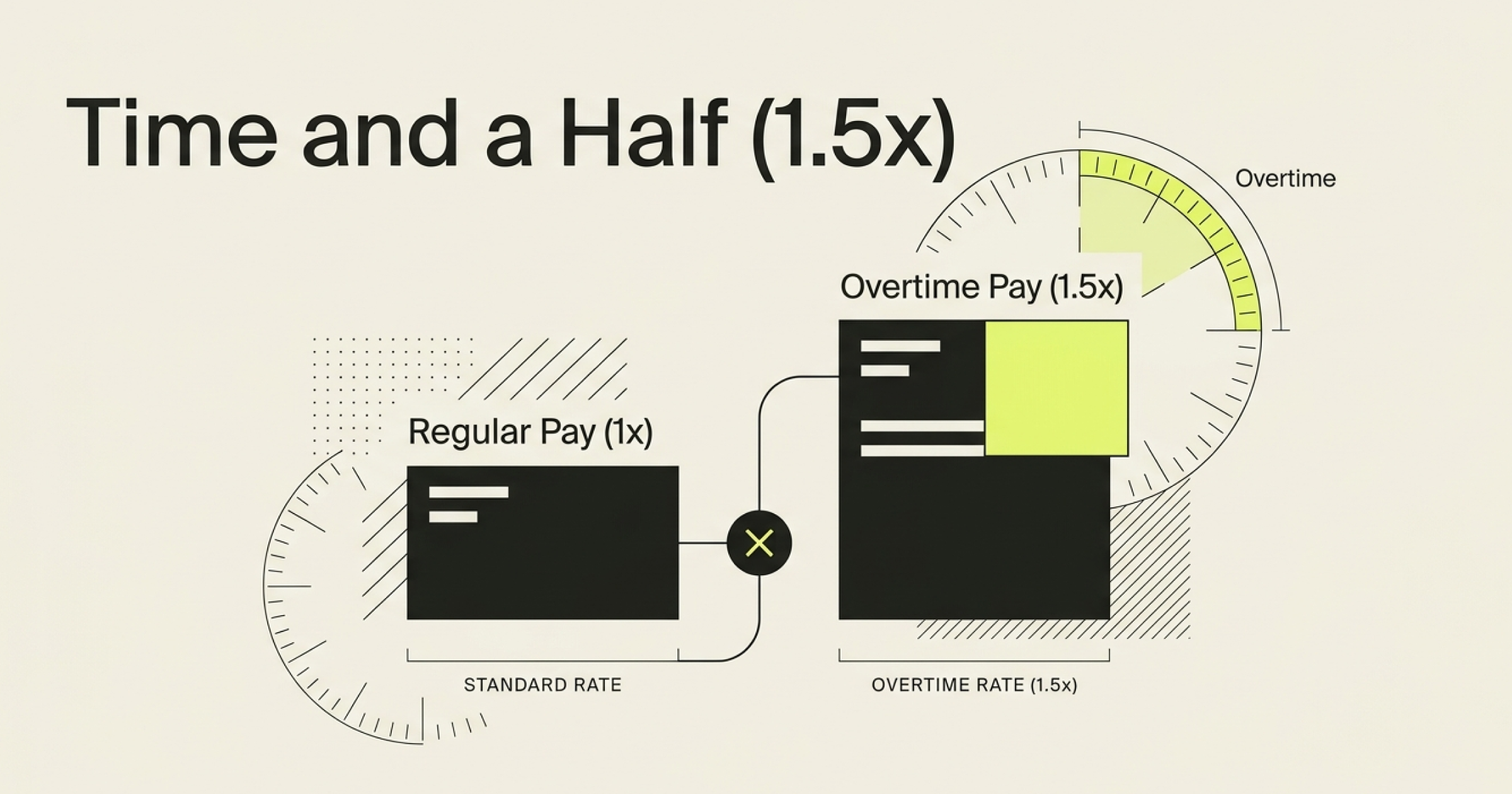
How to Calculate Overtime Pay (Time and a Half)
Multiply your regular rate by 1.5 and then by your overtime hours. The hard part is knowing which rate to use, because it is often higher than your wage.

Article
Minutes to Decimal Hours: Payroll Conversion Chart
Divide minutes by 60. Here is the chart, the four values worth memorizing, and the rounding habit that quietly costs you minutes every week.